A design company specializing in AR/VR and AI technologies wanted to create a compelling and visually engaging website to showcase their expertise, portfolio, and services. The goal was to attract potential clients, showcase their works, establish credibility in the industry, and highlight their innovative approach to design.
- Strong Visual Appeal: Users were drawn to visually appealing websites with high-quality images, interactive elements, and engaging videos that demonstrated the immersive experiences offered by AR/VR and AI designs.
- Limited Awareness: Many users had limited awareness of AR/VR and AI technologies, their potential applications, and the benefits they offer.
- Inadequate Case Studies: Users wanted detailed case studies and success stories that demonstrated the real-world impact and outcomes of the company's projects.
- Lack of Clear Value Proposition: Users needed to understand the tangible benefits and value that AR/VR and AI designs could bring to their projects or businesses.
- Lack of Educational Content: Users desired educational content, tutorials, and guides to help them grasp the potential of AR/VR and AI designs and identify opportunities for their use.

Features & Solutions Proposed
1. Matrix, as in the movie it resembles the concept of living in a simulation.
2. Glitch effect while hovering over components, CTAs, etc.
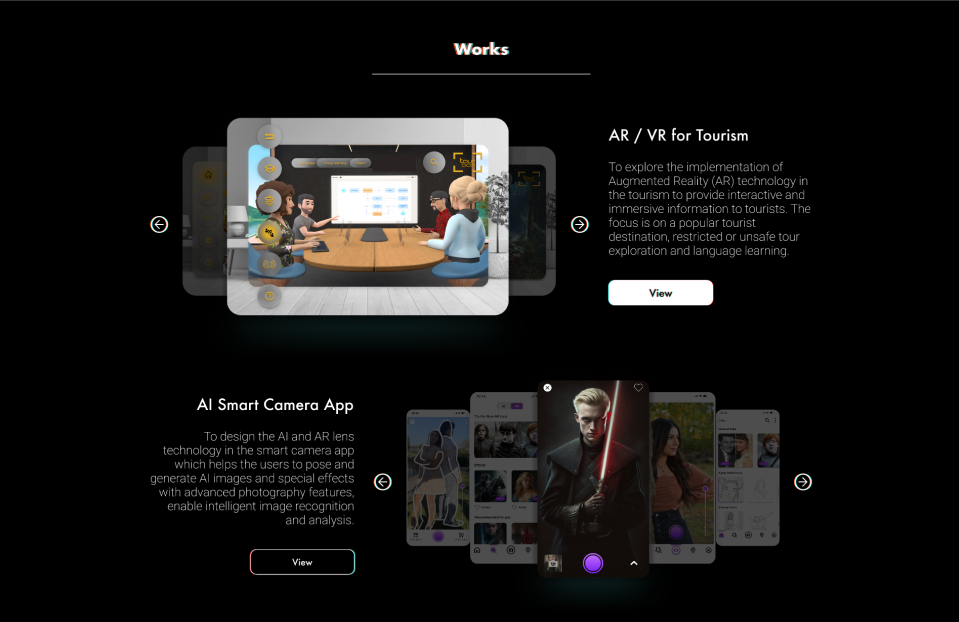
3. Add Projects under the works section.
5. Highlight client testimonials.
8. Show Success statistics & Social Media.
Design
- Responsive Design: Designed the website responsively to ensure a seamless experience across mobile devices.
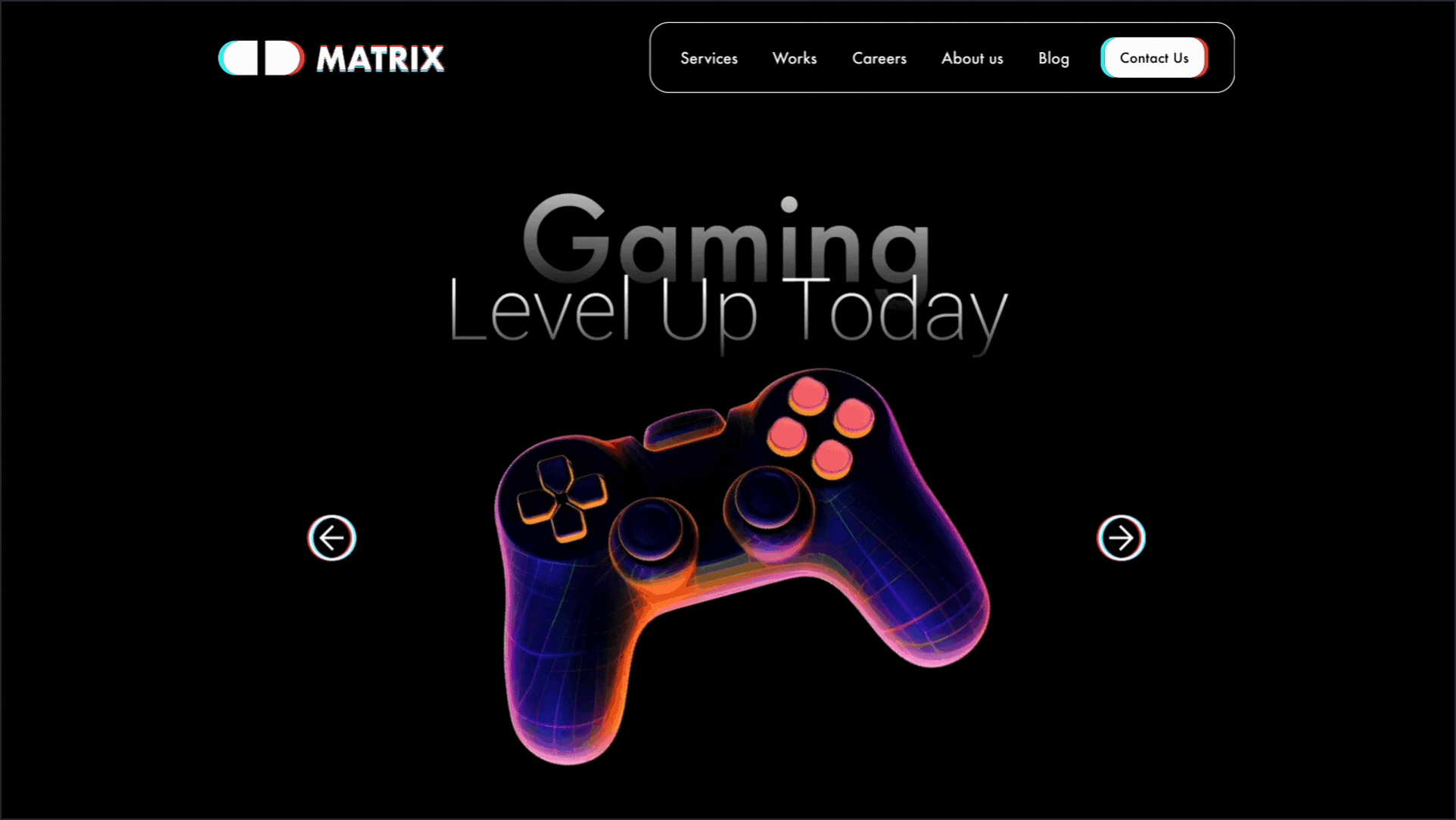
- Minimal and Futuristic.
- Immersive Visuals and Media: Incorporated interactive elements, videos, and high-quality visuals to provide an immersive experience, showcasing the potential of AR/VR and AI technologies. Utilized 3D models and animations to demonstrate products and services.
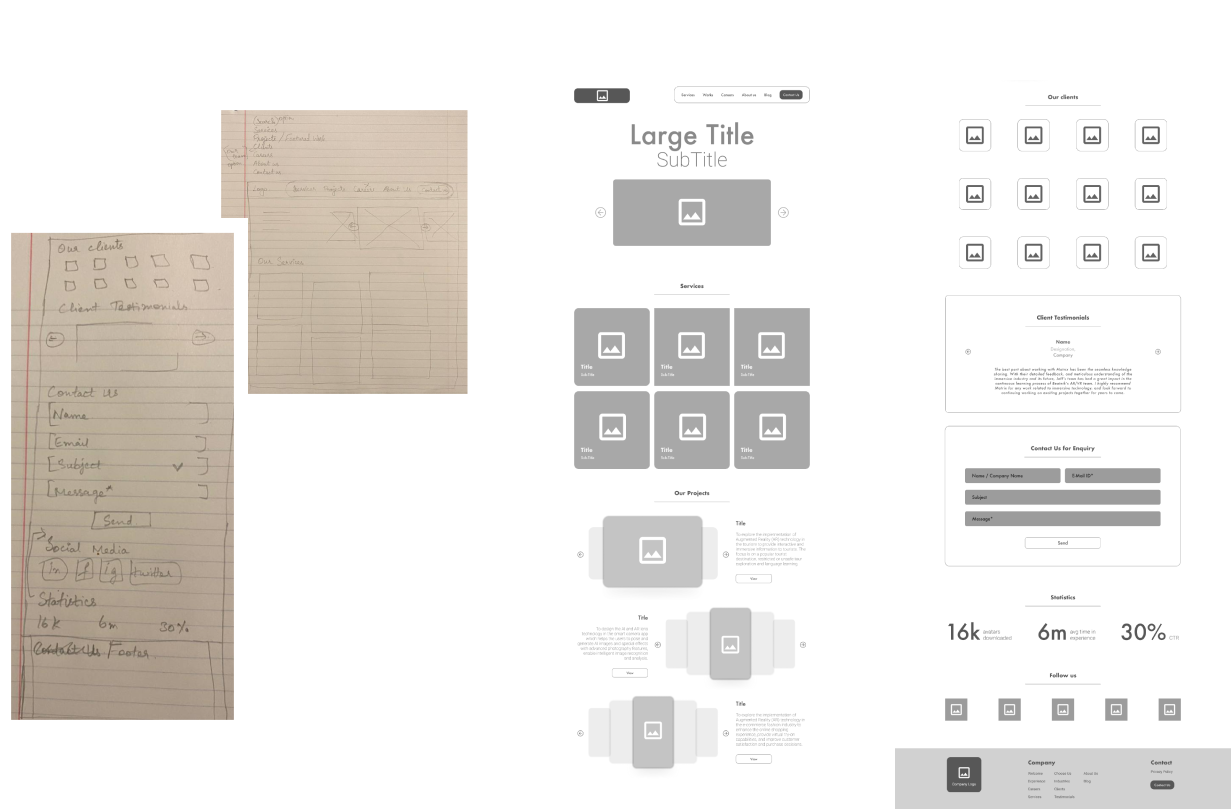
Wireframes
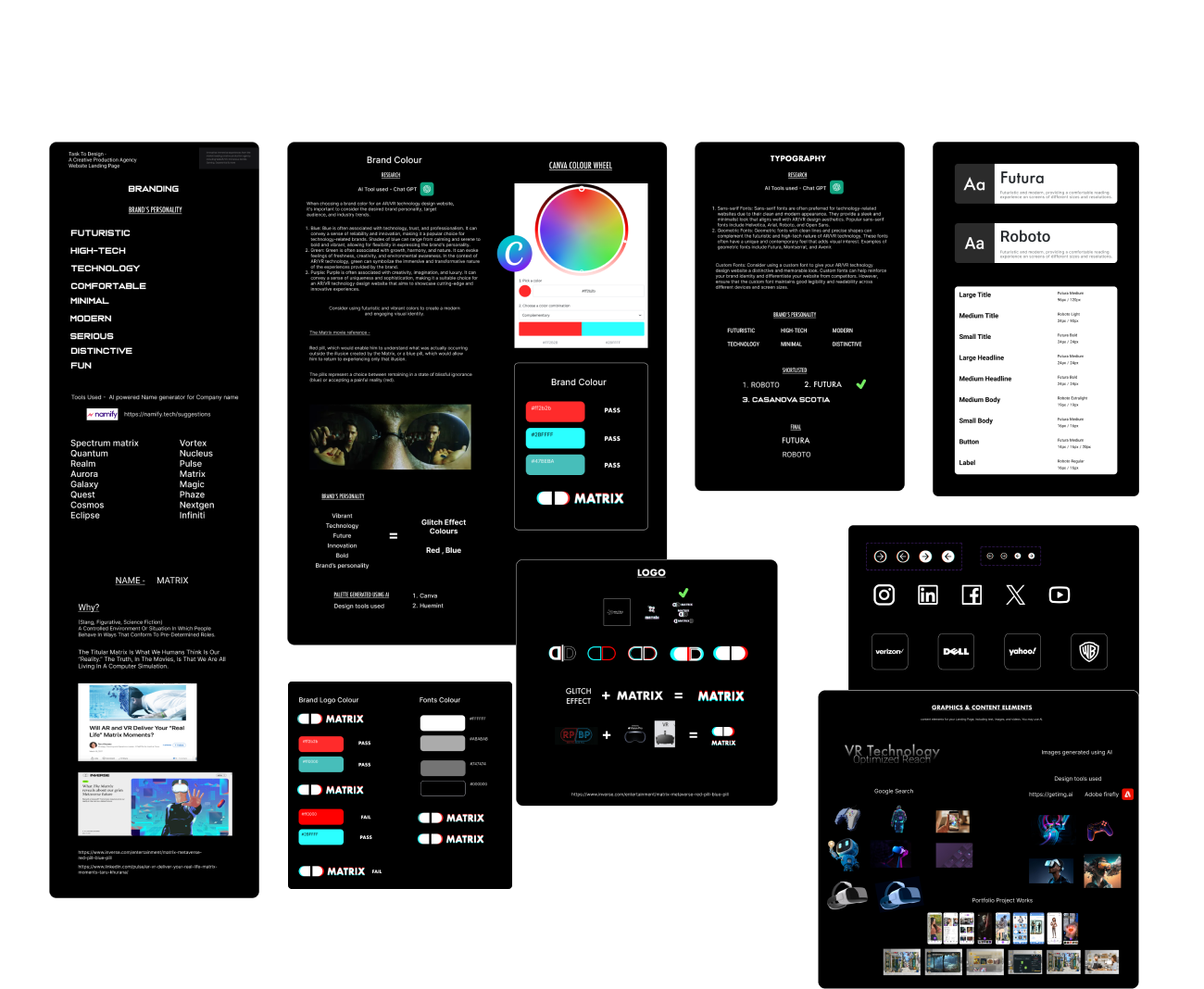
Style Guide
Challenges Faced and How I solved them
- Brand Consistency: One constraint is maintaining brand consistency across the website. I Overcame this by establishing clear brand guidelines that dictate the colour palette, typography, imagery style, and overall visual identity.
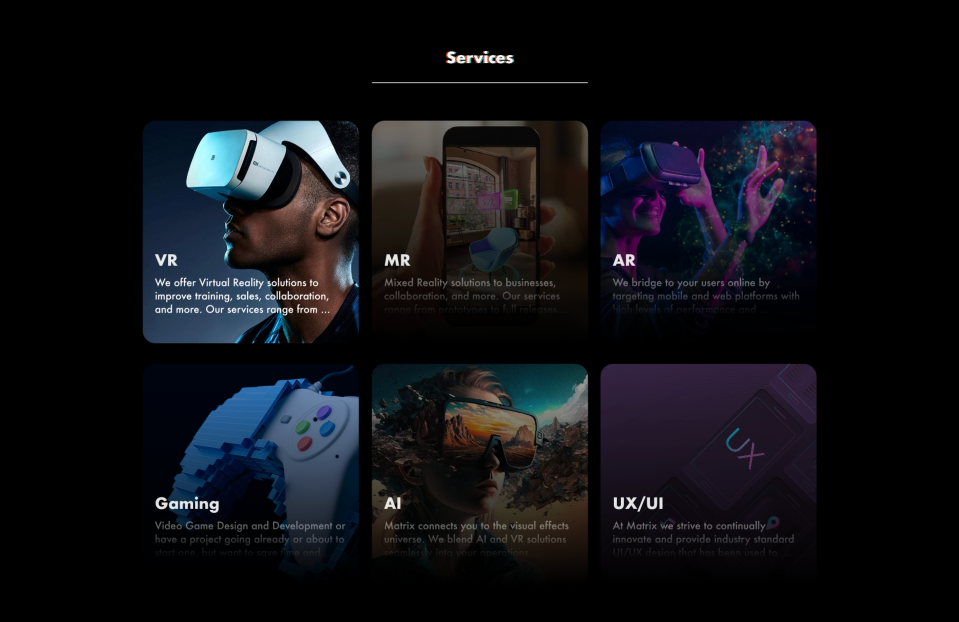
- Content Organization: Creative Production Agencies often have a diverse portfolio of work and a wide range of services. I faced the challenge of organizing and presenting this content in a structured and easily navigable manner. So I developed a clear information architecture that categorizes projects, services, and other relevant information.
- Visual Showcase: Visual content is a key challenging component of a Creative Production Agency website. I Optimized images for the web without compromising their visual impact.
- Responsive Design: The website must be accessible and visually appealing across various devices and screen sizes. I applied responsive design principles to adapt the layout and content to phone screen. I tested it on multiple devices and browsers to ensure a seamless experience for all users.
- Self-imposed Constraints: Challenges in creativity or meet personal goals. I overcame them by creating a design using only black and white colours for the content and glitch effect for the brand logo.
- Figma and Design Tool Skills: Faced challenges in Technical skills in figma for doing Prototype, knowledge of design tools like AI image generator, and experience in specific design areas. I overcame them by watching youtube tutorials.
Testing & Refinement
Conducted usability tests and gathered feedback from users to evaluate the effectiveness of the matrix website. Iteratively refined the design and functionality based on user insights and preferences.
Roles and responsibilities
This is a portfolio project for UI Design and I did the UX research and UI Design part for the Matrix landing page.
Scope and constraints
Matrix website is aesthetically pleasing and it’s visually engaging design that aligns with the company's brand identity and conveys a modern and innovative image. An organized and intuitive navigation structure that allows users to easily access different sections of the website and find the information they need. Included contact information, inquiry forms, and clear calls-to-action to enable users to easily get in touch with the company, request quotes, or seek further information. The constraints include lack of awareness of technologies and Lack of Clear Value Proposition.
Process & What I did
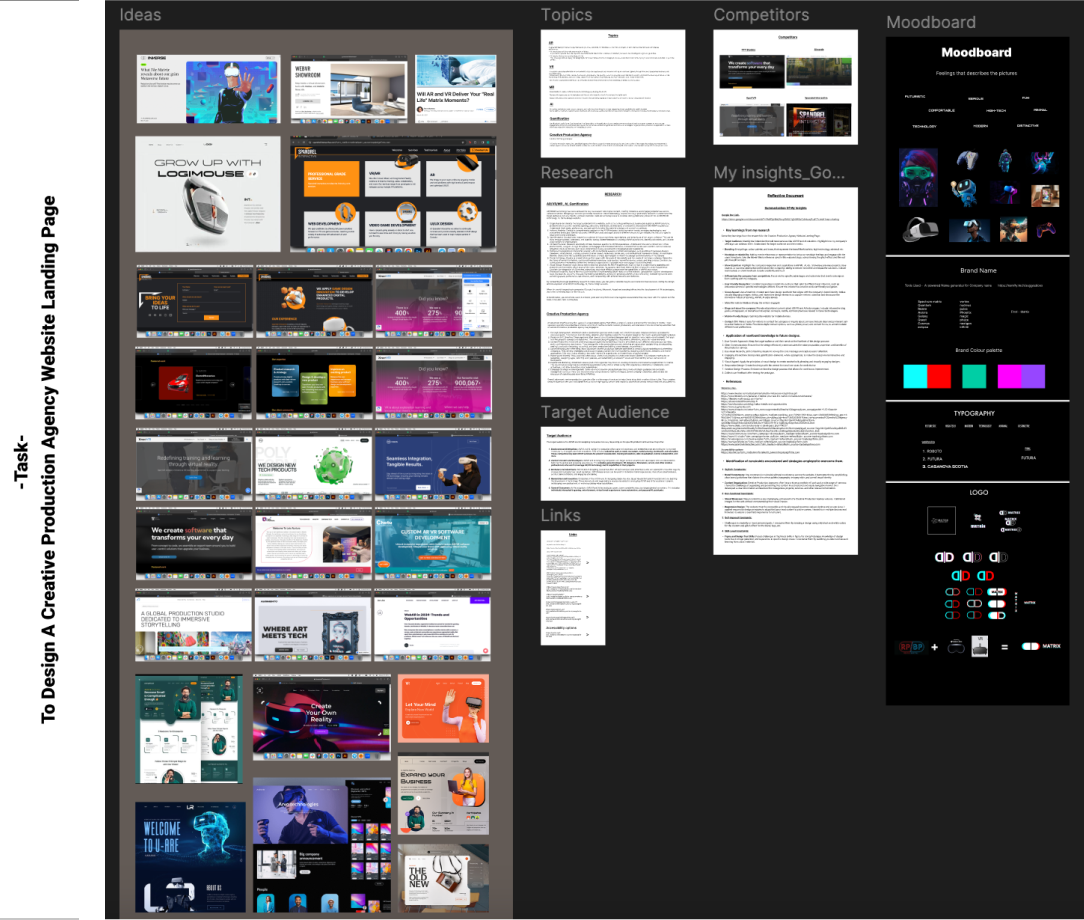
- I was responsible for the whole page and studied the target audience to know their pain points and merged it with the ideas for features I had and found solutions for the issues they are facing.
- I worked on studying the competitors and proposed features that will make this matrix stand out from its competitors.
- I created some sketches and low-fi screens for ideas.
- Then developed those ideas into Hi-Fi wireframes.
- In branding I created a logo, Colour palette, typography and created a style guide and named it Matrix.
- Then visually Designed the page and created the prototype for it and tested it out with the users.
- Then took the feedback and modified the design with the guidance of my instructor.
Application of newfound knowledge to future designs
- User-Centric Approach: Keep the target audience and their needs at the forefront of the design process.
- Clear Communication: Ensure that the design effectively communicates the value proposition, expertise, and benefits of the product or service.
- Use visual hierarchy, and compelling visuals to convey the core message and capture users' attention.
- Engaging Interactions: Incorporate gamification elements, where appropriate, to make the design more interactive and engaging.
- Visual Appeal: Apply the principles of visual design to create aesthetically pleasing and visually engaging designs.
- Responsive Design: Create the design with the correct font and icon sizes for each device.
- Iterative Design Process: Embrace an iterative design process that allows for continuous improvement.
- Collect user feedback after testing the prototype.
Choose The Next Case Study



 Prototype Link